Close
You have no items in your shopping cart.
Search
RSS

Blog

Understanding Gear Ratios: How to Optimize Your Off-Road Performance

Having a great off-road 4x4 is about more than a powerful engine, rugged transmission or grippy tires. The gear ratios help determine whether a vehicle is a rugged rock crawler, an efficient highway cruiser or something in between. To help you gear your 4x4 correctly, Advance Adapters has put together this off-roading gear ratio guide with everything you need to know.

How Gear Ratios Work

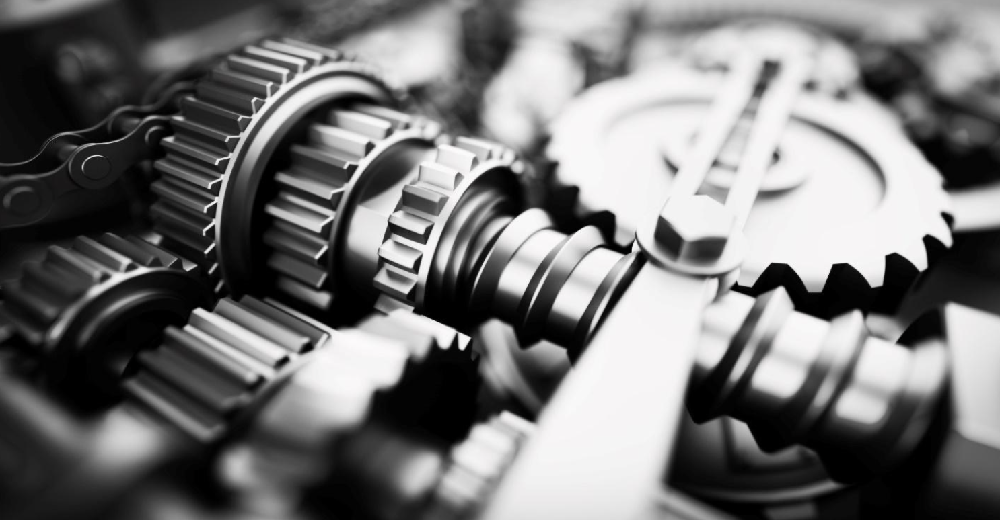
We’ve discussed what gear ratios are previously, but here’s a recap:  every gear set has an output shaft (driven gear) and an input shaft (driving gear). The gear ratio measures how many times the output shaft turns for every one turn of the input shaft. You calculate this by dividing the number of teeth on each. So if the output shaft has 30 teeth and the input shaft has 20, the gear ratio is 1.5:1. Higher gear ratios deliver more torque to the wheels while lower ratios deliver less.

Veteran 4x4 owners think in terms of final drive ratio (FDR). To calculate this, multiply the transmission gear, transfer case gear and axle/differential gear ratio. For example, a 4.10:1 first gear, 4.30:1 transfer case low gear and 3.73:1 differential would be an FDR of 4.1 x 4.3 x 3.73 = 65.76. Something under 50 is good for daily driving, whereas the 110-130 range is recommended for extreme off-roading, with many options in between. Use the Advance Adapters Gear Ratio Calculator to see how a component changes the FDR.
What Factors Affect Off-Road Gearing?

Not only are there many types of off-roading, but how the rest of a vehicle is designed can impact gearing, too. As such, there’s no “one size fits all” gear ratio. Here’s what you should consider when choosing an FDR.

  • Engine Torque: The more torque your engine offers, the lower a gear ratio you can get away with. Smaller engines require higher gear ratios to perform the same tasks.
  • Tire Size: If you put tires on that are larger than the factory shoes, the effective FDR drops because the tires don’t have to rotate as many times to travel the same distance. Smaller tires have the opposite effect.
  • Terrain: We’ll cover this in more detail in another article, but the short version is that a higher gear ratio is better for steep inclines and rocks, whereas a lower gear ratio is better for flat terrain and slippery surfaces.
  • Driving Style: Higher ratios are better for slow, controlled off-roading in tight areas and around big obstacles. A lower ratio will be more beneficial for high-speed off-roading and beginner trails.
  • Payload and Towing: If you plan to carry a lot of passengers and cargo or tow heavy loads while off-roading, you will need a higher gear ratio to compensate.
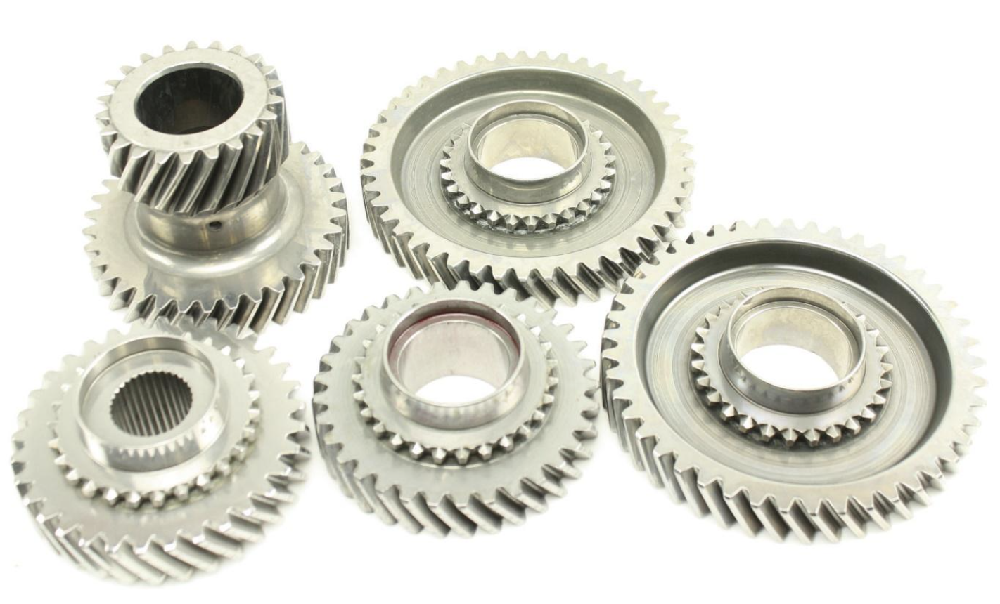
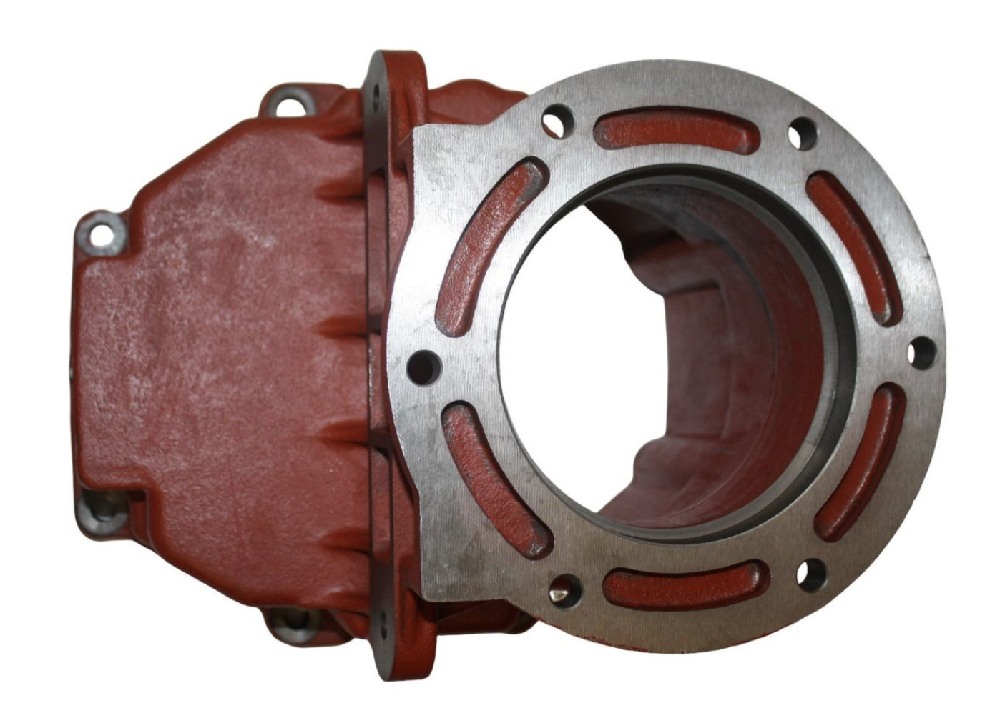
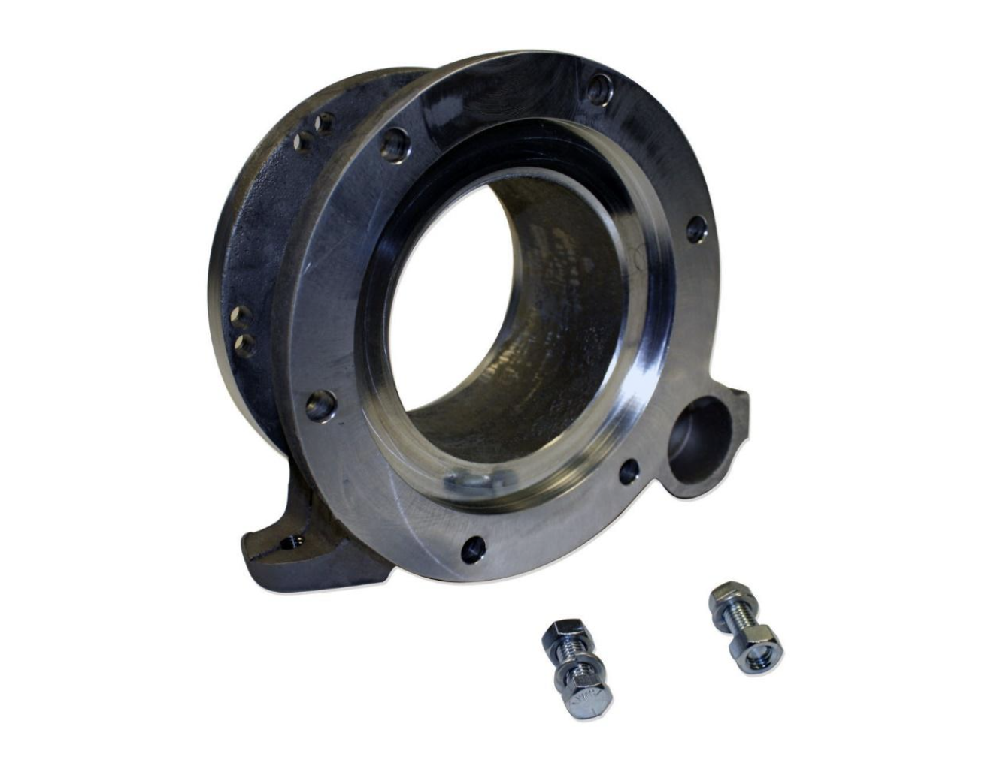
There are two ways to alter the FDR. One is replacing the transmission, transfer case and/or axle with new components that have different gear ratios. The other is swapping the gears within the existing components. In both cases, make sure you order parts and adapters designed to fit your application and made of high-quality materials.
(0)
Troubleshooting Common Transmission Adapter Issues: Tips & Tricks

When swapping engines, transmissions and/or transfer cases, you often need to use a transmission adapter to connect components. However, other issues can arise that hurt performance and longevity. Here are five common transmission issues when installing adapters and how to fix them.

Bellhousing Alignment

The Problem: The bellhousing protects the flywheel assembly, and it must be aligned accurately with the transmission input shaft. Alignment issues are more prevalent when doing transmission swaps.

The Symptoms: A misaligned bellhousing can lead to vibrations, shifting difficulty, clutch failure, clunking sounds and even engine damage. It may also void the transmission warranty.

The Fix: Check that the bellhousing mounting surface and engine block are parallel. Then mount a dial indicator and magnetic base to the flywheel. Slowly turn the crankshaft to sweep the bore. If the total indicator change is higher than 0.01 inches, adjust the bellhousing with offset dowel pins.

Using the Wrong Adapter Plate

The Problem: Every drivetrain component must fit precisely, including the adapter plate. Unfortunately, some DIYers use a plate that wasn’t made for their specific combination.

The Symptoms: An adapter plate that’s even a little off can cause parts shifting out of place, gears catching, power loss and even total system failure.

The Fix: Change the adapter plate to one that matches your project. Advance Adapters guarantees each kit includes the correct plate for the listed transmission-engine-transfer case combination.

Using Low-Quality Parts

The Problem: The adapter plate and hardware must be able to handle the drivetrain forces. Some manufacturers use materials like stud-grade steel and cast aluminum, which aren’t strong enough for heavy-duty driving.

The Symptoms: Poorly-made adapters and hardware wear out faster and are more likely to cause shifting issues. They cost less upfront, but you pay for it later.

The Fix: Get a high-quality adapter made of strong materials such as billet aluminum, cast iron or high-strength steel to ensure durability.

Torque Converter Seating

The Problem: Automatic transmissions use a torque converter to transfer engine power. You need to remove the torque converter to install the adapter, and sometimes DIYers don’t seat it correctly when reinstalling.

The Symptoms: The converter won’t engage properly, so shifting is difficult or delayed. The converter may even come off the transmission pump.

The Fix: Reinstall the converter by greasing or lubricating the snout and sliding it onto the splines. Turn clockwise until you feel the converter clunk twice. The gap between the flex plate and converter should be between 1/8 and 3/16 inches; use spacers if necessary.

Broken Flex Plate

The Problem: Some automatic transmission adapters have a setup where the flex plate is no longer bolted to the torque converter. When this happens, it removes the support the flex plate needs, leaving it prone to bending and breaking.

The Symptoms: Signs of a damaged flex plate include heavy vibrations, strange noises while idling and shifting, power loss at high speeds and trouble starting the engine.

The Fix: One solution is bolting the flex plate to the flywheel. Another is using a stronger flex plate. In both situations, get the assembly re-balanced for the best performance.

(0)
How to Choose the Perfect Dual Transfer Case Kit for Your Off-Road Build

Serious off-roaders need more than an ordinary transfer case. A dual transfer case setup can give you the extra low-range gears needed for steep hills, rock crawling and other extreme conditions. In this guide, the four-wheel drive experts at Advance Adapters look at what this setup involves and offer tips for selecting the right dual transfer kit.

What Is a Dual Transfer Case?

The factory transfer case or even an aftermarket case may not provide enough low gearing options for your off-roading, towing and hill-climbing. By taking the reduction unit from a separate transfer case and attaching it to the output of the existing case, you create a dual transfer case setup. The two reduction sections can be used together or independently.

This setup gives you additional gear sets and torque multiplication for low speeds, challenging terrain and large tires. Adding a standard high-low reduction box to a two-speed transfer case will effectively give you a three-speed case with high, low and extreme low gears. By placing it on a three- or four-speed case, you get even more options. It’s a great choice for heavy-duty off-roaders, towers and anyone who needs more gearing options.

What to Consider for a Dual Transfer Case Kit

Like any aftermarket modification, you should carefully consider all factors before buying parts and components. Here are five important factors that go into selecting a dual transfer kit.

  • Decide what the purpose of the dual case is. Are you putting it in an exclusively off-road vehicle or a vehicle that must be good off-road and on-road? The less you drive the vehicle on main roads, the more aggressive your setup can be.
  • Consider how the additional gear sets affect the Final Drive Ratio (FDR). A dual transfer case is common for rock crawling, but going over an FDR of 130 is more likely to hurt than help. Our Gear Ratio Calculator lets you figure out potential new FDR numbers.
  • Look at what transfer cases and transmissions the kit is designed to fit. For example, our RubiCrawler dual transfer kit is made for Jeep Wranglers with a 42RLE transmission and an NP231, NP241 or RockTrac transfer case. (It can also fit aftermarket Atlas transfer cases made for these 4x4). If you’re adapting a 1979-95 Toyota truck transfer case, there are different kits for the 23-spline and 21-spline versions. Using the correct kit ensures the best performance.
  • Ensure the kit includes all required parts and accessories. To connect the second reduction unit, you need an adapter, housing, bearings, couplers and more. Some conversions also require electronic control modules. A reputable dealer will provide a full list of components and explain what they’re for.
  • Determine whether other modifications to your drivetrain are necessary. You may need to install shorter driveshafts to accommodate the additional equipment or move the exhaust and floorboards for clearance, especially with smaller vehicles. A good kit will tell you what needs to be done and should be backed by support from a knowledgeable team.
(0)
How to Select a Dual Transfer Case - Advance Adapters

How to Select the Perfect Dual Case Kit for Your Next Auto Project

Dual transfer case kits are how serious rock crawlers and off-road explorers get even more torque from their vehicles. They act as a reducer to add another set or two of low gears to what the main transfer case already produces so you have plenty of options. This guide looks at the factors you should consider when choosing a dual transfer case package so it gives the right amount of control for the terrain you want to tackle.

Crawl Ratio

Any transfer case installation or modification should be done with the crawl ratio in mind. Also known as the final drive ratio (FDR), this number reflects how much pull you have in the lowest possible gearing. Let’s say your goal is to have at least a 110 FDR for rock crawling, but your factory transmission and transfer case only produce a 40 FDR. That means your dual transfer case will need at least a 2.75:1 gear ratio to achieve the appropriate crawl ratio. Check the available gearing options to make sure the final combination meets your needs.

Matching the Spline

No matter what gear ratio you choose, the input shaft needs to match the gears. This lets the reduction box connect to the transmission and the main transfer case. For example, V8 Toyota trucks from the 1980s and 1990s generally have 21-spline transmissions while V6 trucks and four-cylinder turbos are 23 spline. Check your transmission to see what the factory input requires; if the dual case kit doesn’t match as-is, adapter couplers may be available.

What Is the Adapter Made of?

Your dual transfer case adapter is going to take a lot of abuse. Therefore, it needs to be constructed from high-quality materials. While full transfer cases are often made of cast iron, heavy-duty dual case kits are more likely to be crafted from aluminum. This is 20-30% lighter than cast iron while still being plenty strong for its purposes. With the adapter, you also don’t have to worry about internal part failures destroying it like you would an aluminum transfer case. Make sure it’s a high-grade aluminum like our 356-T6 heat-treated alloy.

Single or Twin Stick

Just like with regular transfer cases, the reduction box (aka crawler box) can have a single stick or twin stick shifter. A single-stick setup lets you switch between low- and high-range gears as you drive while the twin-stick configuration also lets you independently go between 2WD and 4WD. This ultimately comes down to personal preference; being able to switch drive engagement while moving has benefits, but some find the extra stick cumbersome and confusing.

Stock or Aftermarket Gears

In many doubler setups, you have a choice between keeping the OEM gears or adding lower aftermarket gears. Sometimes, you can combine the two. If you want to personalize the gearing, make sure your reduction housing will accept the desired gear set before purchasing. You don’t want to buy what you think is your dream combination only for them not to get along.

(0)
101 for OEM Parts: What Are OEM Parts

OEM Parts 101: What Are OEM Parts?

Anyone who has ever needed auto parts has heard or seen the term “OEM.” Understanding what this means is important for all vehicle owners — but especially for DIY mechanics and restorers. Our experts have put together this guide to OEM parts so that, whether you shop at Advance Adapters or through your local dealership, you know when OEM is the right choice.

OEM Parts Explained

OEM is short for “Original Equipment Manufacturer.” These parts are identical to what was on the vehicle when it left the factory. For newer vehicles, OEM components are made by the same company that designed and produced the original. In the case of older vehicles, other companies are sometimes contracted to make officially licensed parts using the OEM specifications and materials. An example of an OEM parts company is Mopar, which was created by the Chrysler Corporation solely to make authentic parts for their vehicles.

By purchasing OEM vehicle parts, you can expect the quality, fitment and performance to be the same as what you’re replacing. The parts are also more consistent, and they’re always backed by a warranty in case of failure. In other words, OEM is the “old reliable” of vehicle maintenance and repair. Occasionally, you can also get OEM performance upgrades. On the downside, OEM parts can be up to 60% more expensive, and availability may be limited for certain vehicles — especially if your vehicle is an older model or wasn’t as popular as other models.

OEM vs. Aftermarket Parts

You typically will have a choice between OEM and aftermarket parts for your project. Aftermarket car parts are made by independent manufacturers to replace the OEM parts. Some aftermarket parts look and operate like their OEM counterparts while others are designed to improve performance in some way. A few companies, like AC Delco, make both OEM and aftermarket parts. Manufacturers can make a huge range of aftermarket components or specialize in certain vehicles and types of parts.

There are a few advantages to buying aftermarket parts. Equivalent parts are often less expensive and have more variety, which is great for modding. These alternative components are easier to find, too. However, to the uninitiated, aftermarket parts can feel like a bit of a “Wild West.” While some parts are better quality than OEM, others are worse quality, and so-called universal parts might not be a great fit. Not all aftermarket parts have warranty coverage, either. This means doing your homework to make sure you’re buying a good part from someone reputable.

Which Parts Should I Buy?

The choice ultimately comes down to your preferences and project goals. Order OEM if you’re happy with how the original part performed and are willing to pay more for a sure thing. If you want customization and high-performance options, or the OEM component is no longer available, then go with aftermarket parts. Advance Adapters is known for quality conversions products and backs them with a warranty of up to one year so you know you’re getting the finest OEM and aftermarket 4WD components.

(0)
History of Automatic Transmission Technology
How did automatic transmissions go from compressed air and hydraulics to advanced modern electronics? Read about it in our overview of the fascinating history.
(0)
How to Fix Common Transmission Adapter Issues
If you run into problems while installing a transmission adapter, our team can help. Use this guide to solve common issues so your truck or SUV runs great.
(0)
How to Choose the Right Gear Ratio for Off-Road
Get the right amount of power to the ground for the terrain you like to explore by using this gear ratio guide to know what you should install in your vehicle.
(0)
What Does a Transfer Case Do?

Advance Adapters sells a large assortment of transfer cases and accessories to go off-roading. But if you're new to customizing an SUV or truck, you might wonder what a transfer case is and why you need one for your vehicle.

Outside the off-road and heavy-duty market, you don't hear much about transfer cases. But they are a crucial component - not just in four-wheel-drive and all-wheel-drive rides, but just about every vehicle. So what is the transfer case, and what does a transfer case do? In this guide to transfer cases, we'll look at how they work and the importance of installing one. Whether you prefer exploring trails, jumping dunes or crawling over rocks, we'll help you get the best performance.

How a Transfer Case Works

The transfer case is part of a vehicle's drivetrain. It's what transfers engine power and torque from the transmission to the driveshafts. In turn, the driveshafts carry that power to the axles. A transfer case also coordinates the front and rear axle rotation, splitting power as needed to keep the rotation uniform and reduce the chances of wheel spin.

In some ways, transfer cases function much like differentials. The difference is that the transfer case sends power to the entire axle(s) while a differential sends power to two different wheels on the same axle. It is common for modern off-road vehicles to have both a transfer case and differentials to control torque. Many sports cars and high-performance cars also have this combination to give them maximum acceleration and traction.

Is the Transfer Case the Same as a Transmission?

In short, no. The transmission multiples the engine torque based on predetermined ratios, creating a usable output for the rest of the drivetrain. A transfer case shifts this power to the front and rear axle in conjunction with the driveshaft. While some transfer cases can further multiply (or divide) the transmission output, they are not able to create that output. It's better to think of a transfer case as either an expansion package to a transmission or a separate part of the drivetrain.

Off-Road Transfer Cases

When choosing a transfer case, you'll often have a choice between a chain-driven or gear-driven case. Most modern transfer cases are chain-driven because they are quieter and lighter. Although this is typically fine for everyday driving, many off-roaders prefer the older gear-driven transfer case design. They can handle more torque and won't stretch like chains sometimes do.

In addition to the drive design, the transfer case for an off-road vehicle can have many other configurations. Some four-wheel-drive transfer cases can lock the front and rear driveshafts to ensure the torque is equal for both. You may also have the option to purchase a multi-speed transfer case. These let you change to a lower gear ratio so you have extra torque when climbing mountains or pulling trailers.

A transfer case can have a married or divorced/independent housing. Married transfer cases are directly bolted to the transmission and are sometimes even in the same housing. Independent transfer cases are further down the driveline and have a separate driveshaft to connect to the transmission. This arrangement is common for long-wheelbase vehicles; it also makes swapping engines and transmissions easier in a modified 4x4 vehicle without altering the 4WD setup.

Finally, you need to decide whether you want a full-time or part-time transfer case. A full-time transfer case is always sending power to both axles, permanently putting you in AWD or 4x4 mode. Part-time transfer cases can switch between two-wheel and four-wheel drive using a manual shift or electronic shift selector. While the ability to switch is useful, a true part-time case has no center differential to coordinate the front and rear axles, which can cause wheel-hop when turning on dry surfaces.

Get the Best Transfer Case

If you want to upgrade or replace the transfer case on your vehicle, Advance Adapters has a solution. We sell heavy-duty Atlas transfer cases and Orion transfer cases along with parts, accessories and gearing options. Use our search options to find a transfer case that is a perfect match for your vehicle transmission and engine package.

How do Transmission Adapter Plates Work

When looking at a new engine, transmission or transfer case for an off-road ride, you may have been told that you also need a transmission adapter plate. But why, exactly, is it important to use this part? And why is it that some transmission adapters are so expensive? Knowing the answers to these and other questions will help you hit the right combination for power and torque when you’re going adventuring.

What Is a Transmission Adapter Plate?

An adapter plate is something that lets you join two parts or components that won’t fit together in their OEM form. This could be because they are different sizes and shapes or have different fittings. You’ll find them in almost any industry, including appliances, home electronics and medical equipment.

In the case of transmission adapter plates, they allow you to connect different transmissions, engines and transfer cases while operating as they were designed to from the get-go. If you want to use a certain combination that isn’t offered by the vehicle manufacturer, the right transmission plate lets you do so without having to completely overhaul the rest of the drivetrain.

Most off-road transmission adapters are flat metal plates with holes for the bolt attachments. Although simple at first glance, they must be incredibly strong to withstand the power and torque these components generate.

Types of Transmission Adapters

There are two basic custom transmission adapter designs. Engine to transmission adapters, or bellhousing adapters, are for when you replace either of these components with an aftermarket part that doesn’t fit. Likewise, transmission to transfer case adapters may be needed to mate these components when making upgrades. In both cases, the plate will align the transmission input shaft with the motor/transfer case shaft.

It’s important to also note that you may need more than just a transmission adapter plate when doing engine swaps. Other required parts to help everything connect properly can often include custom flex plates, flywheels, clutches and torque converters.

Can an Adapter Plate Combine Any Engine and Transmission?

Theoretically, you can match any engine to any transmission — or any transmission to any transfer case — using the right adapter. However, you also need to account for the power ratings of each. If you connect a 405-horsepower LS6 engine to the stock transmission in a Toyota Camry, then your transmission will be overtaxed and fall apart. An adapter plate may also not work if the gearbox shaft has a different number of splines as the engine.

Finally, even if an engine and transmission will work in theory, that doesn’t mean they can realistically be mated. Some combos are too large to fit together or fit underneath your vehicle without interfering with other parts — or they may just require too much effort to be worth your while. Do your research before starting to make sure you’re on the right track. The experts at Advance Adapters are happy to answer your questions Monday-Friday and help you find the correct transmission plates.

Blog archive