



Pressure Plates
Heavy-Duty Clutch Pressure Plates
Maximum Clamping Force for Engine Swaps
The pressure plate is the muscle of your clutch system. It applies the necessary clamping force to hold the clutch disc against the flywheel, transferring engine torque to the transmission. In a stock vehicle, factory pressure plates are adequate. However, when you add a high-torque V8, large off-road tires, or heavy gear loads, stock units often fail, leading to slippage and heat damage.
At Advance Adapters, we supply high-performance and conversion-specific pressure plates designed to handle increased torque while maintaining drivable pedal effort. Whether you need a "Low Profile" GM plate for a tight bellhousing or a heavy-duty upgrade for your Jeep 4.0L, we have the correct application.
The Critical Fitment: High-Profile vs. Low-Profile
One of the most common issues in engine conversions (especially Chevy V8 swaps) is clearance.
- Low-Profile (Lo-Pro) Plates: Many conversion bellhousings and adapters have limited space. We offer GM 11" Diaphragm Low-Profile Pressure Plates designed to clear tight bellhousing ribs where a standard "high-profile" unit would rub or bind.
- Bolt Pattern Matching: Pressure plates come in various bolt patterns. For example, Ford 11" applications may use 3 sets of 2 bolts or 6 evenly spaced bolts. Our catalog clearly identifies these patterns to ensure you order the right part for your flywheel.
Product Categories
GM & Chevy Pressure Plates
We stock varied designs to match specific flywheels and bellhousing depths:
- 11" Diaphragm (Short Release/Lo-Pro): Essential for many V8 conversions where clearance is an issue.
- 10.5" & 11" High-Profile: Standard replacement units for truck bellhousings with ample clearance.
- Raised Diaphragm: Designed for use with specific mechanical release bearings.
Jeep & AMC Applications
Upgrade your slipping clutch with our heavy-duty replacements:
- 4.0L & 4.2L Hydraulic Linkage: Direct replacements for 1986+ Jeeps and 1980-85 hydraulic setups.
- 258 & 304 Mechanical Linkage: Engineered for older CJ applications requiring specific diaphragm fingers for mechanical throw-out bearings.
Toyota & Ford Options
- Toyota Land Cruiser (2F/F Engines): Stock replacement assemblies for FJ40/FJ60 series.
- Ford 11" Truck & Bronco: Available in multiple bolt patterns (Coyote 8-bolt flywheel compatible options available).
Pair these with our Clutch Discs and Flywheels for a complete system overhaul.
Technical Guide: Diagnosing Pressure Plate Failure
If your clutch is acting up, the pressure plate is often the culprit. Look for these signs:
- Clutch Slippage Under Load If engine RPMs rise but vehicle speed does not increase (especially in high gear or up hills), the pressure plate springs may have lost tension or the friction surface is overheated. This effectively disconnects the engine from the wheels.
- Shudder or "Chatter" on Takeoff If the vehicle shakes violently when you release the pedal, the pressure plate face may be warped or have "hot spots" (burnt areas). This prevents the disc from engaging smoothly.
- Hard or Stiff Pedal While often a hydraulic issue, a damaged pressure plate diaphragm (bent fingers) can cause binding, making the pedal feel excessively heavy or "notchy."
Frequently Asked Questions (FAQ)
How do I know if I need a "Low Profile" pressure plate?
If you are performing a Chevy V8 conversion using a specialized adapter bellhousing, space is often tight. If you use a standard "High Profile" or "Long" style pressure plate, the diaphragm fingers or the cover itself may contact the inside of the bellhousing. Check your specific conversion kit instructions; we generally recommend Lo-Pro units for these swaps.
What is the break-in period for a new pressure plate?
We recommend a break-in period of 500 miles of stop-and-go driving. This allows the friction material on the clutch disc to seat properly against the pressure plate and flywheel surfaces. Avoid heavy towing or full-throttle launches during this time.
Can I reuse my old pressure plate bolts?
We strongly recommend using new bolts. Pressure plate bolts are under high stress. If you do reuse them, ensure they are clean and apply a thread locker (Blue Loctite). Never use air impact tools to tighten pressure plate bolts; tighten them evenly in a star pattern to prevent warping the cover.
My Ford flywheel has different bolt holes. Which plate fits?
Ford 11" flywheels typically come in two styles: 6 bolts evenly spaced or 3 groups of 2 bolts. You must visually verify your flywheel pattern before ordering, as these are not interchangeable.
Should I resurface my flywheel?
Yes. Installing a new pressure plate and disc on an old, glazed, or warped flywheel will result in immediate chatter and reduced clutch life. Always resurface or replace the flywheel when installing a new pressure plate.

JEEP P.P. 258 and 304 ENGINES
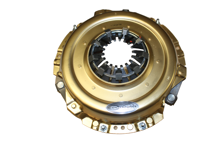
JEEP P.P. 4.0L and 4.2L ENGINES
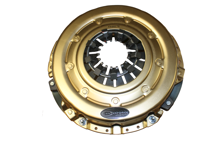
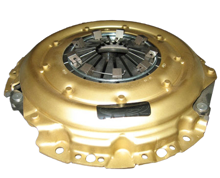
CHEVY PP. DIAP. (LO-PRO) 11
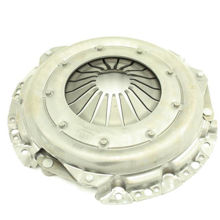
LUK CHEVY 11 BULK PP (HI-PROFILE)
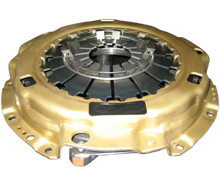
STK TOYOTA L/C P/P and DISC.

FORD 11 P.P.(3 Sets of 2 bolt holes)
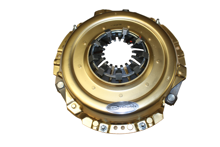
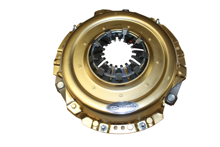
JEEP P.P. 80-85 HYD.
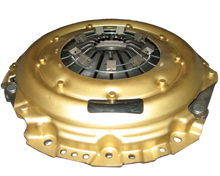
11 P.P. 3/8 DIA. 302/BRONCO II
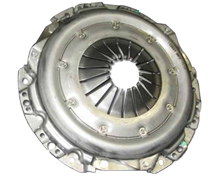
CHEVY 10.5 BULK PP (HI-PROFILE)
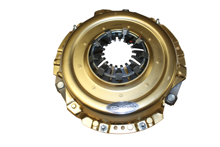
CF360029 : Centerforce (360029) 10" Pressure Plate
- 1
- 2
