


How to Choose a Radiator for Engine Swaps
An engine swap creates more than a horsepower upgrade. It changes how much heat the vehicle produces, how that heat moves through the cooling system, and how much airflow the radiator needs at idle, highway speed, and low-speed off-road use.
Whether you are installing a V8 in a Jeep, swapping an LS into a trail rig, upgrading a classic 4x4, or building a custom drivetrain, the radiator needs to match the entire conversion. The right radiator helps protect the engine, improve reliability, and keep the vehicle usable in real-world conditions.
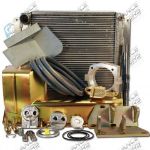
Advance Adapters offers cooling products for 4WD engine conversions, including aluminum off-road radiators, engine swap radiator models, fan kits, transmission cooling lines and accessories, water pumps and thermostats, and temperature sensor kits. Converted vehicles, especially those with larger engines, generate more heat and need cooling parts designed for those demands.
Why the Radiator Matters in an Engine Swap
Factory radiators are designed around the original engine, transmission, grille opening, fan setup, and vehicle use. Once the engine changes, the original cooling system may no longer be enough.
An engine swap can affect:
- Engine heat output
- Radiator inlet and outlet location
- Coolant hose routing
- Fan clearance
- Water pump compatibility
- Transmission cooler requirements
- Temperature sensor location
- Low-speed airflow
- Off-road heat load
- Space between the engine and radiator
This is especially important in 4x4 conversions. Off-road vehicles often run at low speeds, climb steep grades, idle for long periods, and operate in mud, sand, rocks, and hot weather. That means the radiator and fan system must work even when vehicle speed is not providing much airflow.
Start With the Vehicle and Engine Combination
The first step is to choose a radiator that matches the vehicle and engine swap combination. A radiator that fits one Jeep, truck, or Land Cruiser conversion may not fit another without changes to mounts, hoses, fans, or engine placement.
For example, Advance Adapters organizes radiator options by vehicle platform and engine family, including Jeep 1987 to 2006 radiator options, Jeep 1972 to 1986 radiator options, Jeep 1971 and earlier radiator options, Toyota Land Cruiser FJ40/FJ60 radiators, and Toyota truck radiators.
Before choosing a radiator, confirm:
- Vehicle year, make, and model
- Engine family
- Manual or automatic transmission
- Radiator mounting space
- Hood and grille clearance
- Inlet and outlet location
- Water pump style
- Fan type
- Transmission cooler needs
- Intended use
Choose the Right Radiator Material and Core Design
Aluminum radiators are a common choice for engine swaps because they offer strong heat transfer, low weight, and good durability for performance and off-road applications. Advance Adapters’ radiators category includes aluminum off-road radiators and replacement performance radiators, including engine swap models.
Core design also matters. Features such as tube width, fin density, and crossflow design can affect how efficiently the radiator transfers heat from the coolant to the air passing through the core.
Engine Swap Radiator Selection Checklist
|
What to Confirm |
Why It Matters |
|
Vehicle platform |
Determines radiator size, mounting points, grille clearance, and available space |
|
Engine family |
A V8, LS, Hemi, Ford small block, or other swap may produce more heat than the stock engine |
|
Transmission type |
Automatic swaps may need transmission cooler provisions or external cooler planning |
|
Radiator inlet and outlet |
Hose routing must match the water pump and engine layout |
|
Fan setup |
Low-speed cooling depends on correct fan size, airflow, shroud, and electrical control |
|
Core design |
Tube width, fin density, and crossflow design affect heat dissipation |
|
Sensor compatibility |
Temperature sensors must work with the gauge, ECU, or fan control system |
|
Off-road use |
Crawling, sand, mud, and steep climbs create more heat at lower vehicle speeds |
Manual vs Automatic Transmission Radiators
Transmission choice affects radiator selection. Manual transmission applications usually do not require an integrated transmission cooler. Automatic transmission swaps often require a radiator with cooler provisions or a separate transmission cooler setup.
Advance Adapters notes that its cooling products include radiator options for manual and automatic transmission conversions, along with transmission cooling lines and accessories.
This is especially important for off-road vehicles with automatic transmissions. Crawling, towing, large tires, high stall converters, and steep terrain can increase transmission heat. If the automatic transmission overheats, the entire drivetrain can suffer.
Plan the Fan System Early
A radiator cannot cool properly without airflow. In an engine swap, the fan system is just as important as the radiator itself.
There are two common questions:
Should the build use a mechanical fan or electric fan?
Should the electric fan be a pusher or puller?
In many engine swaps, space limitations make electric fans attractive. Advance Adapters offers SPAL fan kits, including pusher and puller fan options, wiring harnesses, and mounting brackets.
A puller fan is generally mounted behind the radiator, drawing air through the core. A pusher fan mounts in front of the radiator and pushes air through it. The right choice depends on space, grille clearance, engine placement, and accessory drive layout.
Do Not Ignore Hose Routing
Radiator inlet and outlet locations must match the engine’s water pump and hose routing. A radiator may physically fit the vehicle but still cause problems if the hose outlets are on the wrong side or require awkward routing.
Before ordering a radiator, check:
- Upper hose location
- Lower hose location
- Water pump outlet direction
- Thermostat housing position
- Accessory drive clearance
- Steam port routing for LS engines
- Hose clearance near belts and pulleys
LS swaps deserve extra attention because steam port routing must be handled correctly as part of the cooling system plan.
Temperature Sensors and Fan Control
An engine swap may change how the temperature gauge, ECU, and fan control system receive temperature information. The radiator and cooling system should allow for the correct sensor placement.
Advance Adapters offers temperature sensor kits, including in-line temperature sensor adapters and SPAL harness sensor options.
This is important when the engine, vehicle gauge, and fan controller were not originally designed to work together.
Cooling for Off-Road Use
Off-road vehicles place unique demands on cooling systems. A highway vehicle gets constant airflow through the grille. A trail rig may spend long periods crawling slowly with very little natural airflow.
That means off-road engine swap cooling should account for:
- Low-speed airflow
- Long idle time
- High engine load at low speed
- Mud and debris on the radiator
- Steep climbs
- Hot weather
- Winch or bumper airflow restriction
- Automatic transmission heat
Advance Adapters describes its cooling products as designed for 4WD engine cooling, especially when larger engines create more heat in off-road conditions.
Common Radiator Mistakes in Engine Swaps
Avoid these common problems:
- Choosing a radiator only by overall size
- Ignoring inlet and outlet position
- Using too small of a fan
- Skipping a shroud when one is needed
- Forgetting automatic transmission cooling
- Poor hose routing near belts or pulleys
- No plan for temperature sensors
- Not accounting for winch, grille, or bumper airflow restriction
- Reusing an old radiator that was designed for the stock engine
- Failing to test the cooling system under real load
The radiator should be selected as part of the whole swap, not as a last-minute part.
Best Radiator for Jeep Engine Swaps
Jeep swaps are among the most common radiator conversion projects because engine bays are tight and many builds involve larger engines than the vehicle originally used. Advance Adapters lists radiator categories for Jeeps 1987 to 2006, Jeeps 1972 to 1986, and Jeeps 1971 and earlier.
For a Jeep YJ or TJ engine swap, the right radiator depends on whether the engine is a Chevy small block, Chevy LS Gen III/IV, Ford small block, or another conversion. It also depends on whether the Jeep uses a manual or automatic transmission.
Final Recommendation
The best radiator for an engine swap is the one that fits the vehicle, matches the engine, supports the transmission, clears the fan and accessories, routes hoses correctly, and cools well in the conditions where the vehicle will actually be used.
For 4x4 swaps, that usually means choosing an engine-swap-specific aluminum radiator, pairing it with the right fan system, planning transmission cooling when needed, and making sure sensors, hoses, and water pump components all work together.
Ready to build a reliable cooling system for your swap? Explore Advance Adapters radiators, fan kits, transmission cooling lines and accessories, water pumps and thermostats, temperature sensor kits, and engine accessories for Jeep, Toyota, Land Cruiser, S-10, and other 4x4 engine conversions.
FAQ Section
What size radiator do I need for an engine swap?
The right radiator size depends on the vehicle, engine, available space, airflow, transmission type, and intended use. Do not choose by size alone. Match the radiator to the engine family, hose locations, fan setup, and cooling demands.
Are aluminum radiators good for engine swaps?
Yes. Aluminum radiators are commonly used in engine swaps because they provide strong heat transfer, low weight, and good performance in modified vehicles. They are especially useful in off-road and V8 conversion applications.
Do I need a different radiator for an automatic transmission swap?
Often, yes. Automatic transmissions create additional heat and may require a radiator with transmission cooler provisions or a separate external transmission cooler.
Do engine swaps need electric fans?
Many engine swaps use electric fans because space between the engine and radiator is limited. The right fan setup depends on available clearance, airflow needs, radiator size, and whether a pusher or puller fan works best.
Why does my swapped engine overheat at idle?
Overheating at idle is often caused by poor low-speed airflow, an undersized fan, missing shroud, incorrect fan direction, trapped air, poor hose routing, thermostat issues, or a radiator that is not matched to the engine’s heat output.
What radiator is best for an LS swap?
The best LS swap radiator matches the vehicle platform, engine accessory layout, hose routing, fan clearance, transmission type, and cooling demands. LS swaps should also account for steam port routing and proper fan control.