

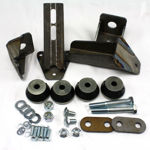
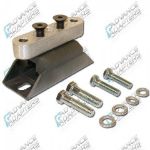

Release Bearings & Retainers
At Advance Adapters, we understand that a successful engine conversion or transmission swap relies on the smallest details. Our selection of release bearings (throw-out bearings) and bearing retainers is engineered to solve common drivetrain failures and facilitate seamless engine swaps. Whether you are adapting a Chevy V8 to a Toyota Land Cruiser or upgrading a weak factory retainer on an NV4500, we provide the components necessary for reliable clutch actuation.
The Advance Adapters Difference: Steel vs. Aluminum Retainers
A common failure point in many manual transmissions—such as the T5, NV4500, and various Ford/GM units—is the factory aluminum bearing retainer. Over time, the hard steel release bearing slides back and forth, cutting grooves into the soft aluminum snout. This "grooving" causes the clutch to hang up, resulting in erratic engagement, a heavy pedal feel, or complete failure to release.
We offer upgraded steel bearing retainers designed to:
- Prevent Snout Grooving: Steel-on-steel contact is far more durable than the factory aluminum design, ensuring smooth travel for the release bearing.
- Support Heavy Loads: Essential for high-torque applications and off-road vehicles where drivetrain stress is high.
- Fix Leaks: Many of our retainer kits, such as the NV4500 GM Input Retainer, are modified to ensure proper sealing and fitment during engine swaps.
Product Categories
High-Performance Release Bearings
The release bearing acts as the critical interface between your clutch fork and the pressure plate. We stock a variety of mechanical and hydraulic bearings tailored for conversion applications:
- General Motors (GM) Applications: We carry flat-faced GM release bearings suitable for various conversion depths to ensure proper geometry.
- Toyota Land Cruiser Conversions: We offer specialized bearing assemblies for mating Chevy V8s to stock Land Cruiser 3-speed transmissions or Chevy manual transmissions.
- Hydraulic Release Bearings: For setups where mechanical linkage is difficult to route, we offer internal hydraulic release bearings (such as for stock Peugeot replacements) that act as both the slave cylinder and release bearing.
Transmission Bearing Retainers
Our catalog features retainers specifically machined or adapted for popular transmission swaps:
- NV4500 GM Input Retainers: Modified retainers to ensure proper fitment of GM engines to the NV4500 transmission.
- Ford & Ranger Torque Splitters: Specialized retainers for Ranger torque splitter applications.
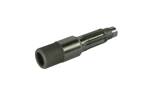
- Replacement Snouts: Solutions to repair damage caused by disintegrated pilot bearings or improper lubrication.
Compatible with our full line of Clutch Kits, Flywheels, and Pilot Bearings & Bushings.
Technical Guide: Diagnosing Clutch Release Issues
If you are experiencing drivetrain issues, the problem often lies within the bellhousing. Use this guide to determine if you need a replacement bearing or retainer.
- The "Chirping" or "Squealing" Noise If you hear a high-pitched squeal or growl when you depress the clutch pedal, but the noise disappears when you release the pedal, your throw-out bearing is likely failing. This indicates internal wear or a lack of lubrication.
- Hard Shifting and Sticky Pedal If the clutch pedal feels "sticky" or requires excessive force, the release bearing may be binding on a grooved retainer snout. In severe cases, the bearing may catch on the retainer, preventing the clutch from fully disengaging, which leads to gear grinding,.
- Vibration During Engagement If the vehicle shudders when you begin to release the clutch, check for a worn pilot bearing. A disintegrated pilot bearing can allow the input shaft to wobble, which subsequently damages the release bearing and the retainer snout.
Frequently Asked Questions (FAQ)
What is the difference between a throw-out bearing and a release bearing?
There is no difference; the terms are used interchangeably. Both refer to the bearing that rides on the transmission retainer snout and transfers the movement of the clutch fork to the pressure plate fingers to disengage the clutch.
Why should I upgrade to a steel bearing retainer?
Factory retainers are often made of aluminum. Because the release bearing is made of harder steel, it can wear grooves into the aluminum snout over time. These grooves can catch the bearing, causing sticky clutch operation. An Advance Adapters steel retainer eliminates this wear point for smoother, longer-lasting operation.
How much grease should I apply to the bearing and retainer?
Lubrication is critical but must be done sparingly. Apply a light film of high-pressure, Lithium Complex grease (NLGI #2 or #3) to the retainer snout and the inside recess of the bearing. Do not over-grease. Excessive grease can be flung onto the clutch disc friction surface, causing clutch chatter and slippage.
Should I replace the release bearing when installing a new clutch?
Yes. It is highly recommended to replace the release bearing, pilot bearing, and check the retainer snout for wear whenever the transmission is removed. The cost of the part is minimal compared to the labor required to pull the transmission again if the old bearing fails.
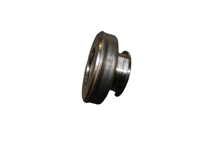
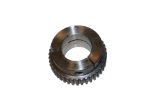
T/O BEARING ASSY.w/ a B.O.M.
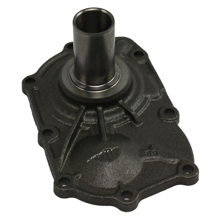
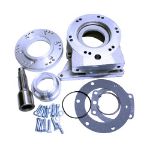
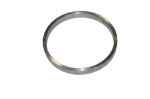
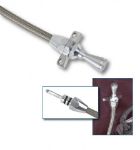
RETAINER-AX15 JEEP RETAINER EXT SLAVE
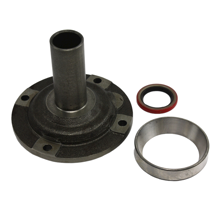
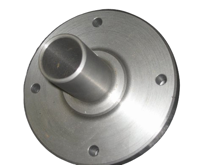
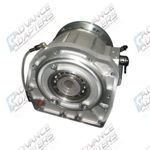
RETAINER-DODGE NV4500 GAS 1.430 SNOUT
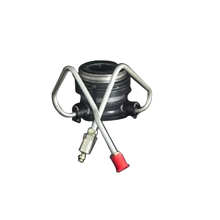
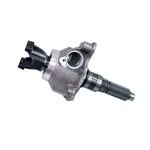
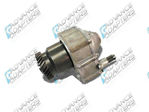
STK JEEP HYD.BRG.-PEUGEOT
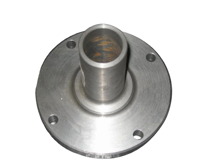
RETAINER- FORD FRONT BEARING 4.849